
A useful creative brief does not try to make the campaign before the creative team does. It makes the decision behind the campaign clear enough that people can produce sharper work, resolve tradeoffs and recognize when an attractive idea is solving the wrong problem.
That is especially important when a campaign has to move through more than one customer moment. A broad business goal can turn into a crowded list of deliverables: a film, social work, a landing page, an email, a retail expression and sales materials. Without a shared point of view, every piece can be polished while the overall campaign still feels scattered.
A campaign creative brief is the working agreement that prevents that drift. It identifies the change the business needs, the audience reality that matters, the message worth carrying and the proof that earns belief. The rest of the work can flex around those choices without losing the thread.
Start with the decision, not the deliverables
The first line of a weak brief often sounds like a production request: "We need a launch video and paid social." That may be true, but it does not explain what the work needs to change. It starts the conversation with output before anyone has agreed on the reason the audience should care.
Start with the business decision instead. Is the company entering a new category? Is a familiar service being misunderstood? Does a retail offer need to feel more personal? Is a campaign meant to build confidence before asking for action? A useful brief gives that problem enough definition that a team can tell whether an idea is helping.
The American Marketing Association describes a marketing campaign as coordinated activity around a common theme. The brief is where the common theme earns its role. It connects the work to an intended shift in customer understanding, feeling or behavior, rather than treating a shared visual style as a strategy.
Write the problem as a change. "Help people see vaccination as a step toward the life they want back" gives creative work a different job than "promote vaccines." "Make a complex health service feel easier to understand" is more useful than "increase awareness." The difference is not wordsmithing. It changes the evidence, emotion and customer moments the campaign needs to address.
Define the audience tension that makes the work matter
An audience description is not a demographic field to fill in and forget. Age, location and purchasing history can be useful, but they rarely tell a creative team what needs to move. The brief needs the tension behind the decision: the hesitation, hope, pressure or unmet expectation that makes a message relevant.
For a retailer, the tension may be feeling invisible in a sea of generic offers. For a healthcare brand, it may be the gap between knowing an action is sensible and feeling ready to take it. For a business that has outgrown its old story, it may be the difference between what leaders know they provide and what customers can actually describe.
The best tension is specific enough to guide choices but broad enough to travel. It should not be a slogan or a line of copy. It is the human situation that lets a campaign have emotional and practical relevance at the same time.

One useful test is to ask what the audience is trying to protect, gain or make easier. A strong answer creates a more useful brief than a list of brand attributes. It forces the team to connect the business objective to a real customer context, which makes the eventual message less likely to sound interchangeable.
State the one thing the campaign needs to make clear
Once the problem and tension are clear, write the central message. This is the single idea the audience should be able to carry away after a brief encounter. It is not necessarily the tagline, and it should not be a paragraph of claims. It is the campaign's organizing thought.
A central message should answer three questions: what is changing for the audience, why does that matter now and why is this brand credible in that moment? The answers do not all need to appear in the same line. They need to exist in the brief so a team can build a message that has both a clear signal and a reason to believe it.
That is why a campaign message needs more discipline than a clever phrase. The guide to campaign messaging explains how a dominant message can be supported by practical proof, without allowing every channel to lead with a different benefit. The brief should set that hierarchy before people begin producing assets.
Try a simple removal test. If the company name disappeared, could the idea belong to almost anyone in the category? If so, it may be pleasant but too generic. A stronger brief connects an audience tension to something the business can honestly deliver, then gives the creative team room to express it in a memorable way.
Give the message proof, not just polish
A campaign earns trust when the proof fits the promise. If the message is about ease, the experience should look easier to navigate. If it is about personal value, the offer or customer moment should show that the brand recognizes the individual. If it is about care, the language and next step should respect the concern beneath the decision.
List the two or three reasons the audience should believe the central message. Those reasons might be a distinctive service, a practical outcome, an experience the customer can recognize, a credible demonstration or a relevant point of difference. Do not fill this section with every fact the organization could possibly claim. The useful proof is the proof that makes the campaign's promise harder to dismiss.
The AMA's branding guidance puts the emphasis on the perception a business creates, not only the visual marks it uses. A strong brief treats proof in the same way. It asks what customers will encounter that makes the intended perception feel true, rather than assuming a campaign can create confidence by assertion alone.
That proof should also shape the production plan. A film may create the emotional opening. A landing page may provide detail. A store moment may make the promise tangible. A sales conversation may answer the question that follows. The brief does not need to prescribe every asset. It needs to make clear what each expression has to contribute.
Set the boundaries that make better creative possible
Constraints are not the dull section at the end of a brief. They are what give a team useful edges. A clear brief should identify the non-negotiables: the audience priority, legal or regulatory requirements, essential offer details, timing, channel realities, brand principles and the decision makers who need to stay aligned.
The point is not to bury the creative team in background material. It is to separate what is fixed from what is still open. When every detail looks equally important, people either follow the safest path or spend days rediscovering the priorities in review meetings. A short, direct list helps teams make confident choices earlier.
For a regulated category, accuracy and empathy may be fixed. For a retail campaign, the core offer and customer journey may be fixed while the expression remains open. For a business with several partners, the brief may need to clarify who owns the final call when speed and consistency pull in different directions.
Good constraints protect the idea. They stop a campaign from becoming a collection of individual preferences while still leaving space for creativity, judgment and new executions that the brief could not have predicted.
A simple campaign creative brief template
Before the kickoff, capture the decisions that need to stay true when the work changes shape. A useful campaign creative brief can be short, but it should give the team clear answers to these questions:
- What needs to change? Name the business problem and the customer shift the campaign needs to create.
- Who needs to feel that change? Describe the audience situation, tension or hesitation that makes the message relevant.
- What is the central message? State the one idea people should carry away after a short encounter with the work.
- What makes the message credible? Choose the proof, experience or outcome that gives the audience a reason to believe it.
- Where will the idea show up? Identify the customer moments that matter and the role each one needs to play.
- What is fixed and what is open? Separate essential requirements from the creative choices the team can explore.
- How will the team know it is working? Agree on the evidence that matches the campaign's job, not just the easiest activity to count.
This template is not a substitute for judgment. It is a way to make the most important decisions visible before a busy team turns them into a long list of assets. For the broader sequence of objectives, channel roles and measurement, pair it with the campaign plan template.
Plan how the idea should move across customer moments
A campaign brief should acknowledge that customers do not meet the work in one tidy sequence. One person may see a short video first. Another may arrive through a search result, a retail environment, an email or a sales conversation. The campaign needs a consistent center, but each expression needs a role.

Map the few moments that matter most. At discovery, the work may need to create relevance or intrigue. During consideration, it may need to make the message practical and credible. Near action, it may need to reduce friction and make the next step obvious. After action, it may need to prove that the promise continues beyond the first impression.
This is where a strong campaign branding system becomes useful. The system gives people recognizable cues across formats, while the brief gives each touchpoint a reason to exist. Together they let a campaign adapt without turning into a copy-and-paste exercise.
Ask a practical question of every proposed deliverable: what does this moment need to add that another moment cannot? If the answer is unclear, the asset may be a habit rather than a useful expression of the idea.
Make measurement part of the brief from the beginning
Measurement belongs in the brief because it defines what success actually means. A campaign that needs to build familiarity should not be judged only by immediate clicks. A campaign that needs to clarify a new offer should not be judged only by reach. The expected evidence has to match the change the work was designed to create.
Choose a small set of signals that make sense for the decision. That can include qualified traffic, inquiries, understanding, consideration, message recall, conversion behavior or a change in the way customers describe the brand. The right mix depends on the campaign, the customer journey and what the business can genuinely observe.
It also helps to name what the team wants to learn. Which audience needs more proof? Which customer moment creates the most interest? Does one expression of the idea explain the value better than another? A brief that leaves room for those questions becomes more useful after launch, because the team can improve the work without losing the central idea.
Use the brief to improve reviews, not just kickoff meetings
The best creative briefs keep working after the kickoff. They give everyone a shared filter for review. Instead of debating whether a concept is simply exciting or whether a stakeholder personally likes the tone, the team can ask clearer questions: does it address the audience tension? Does it make the central message more recognizable? Does the proof support the promise? Does it work in the customer moment it is meant to serve?
That does not remove judgment from creative work. It gives judgment something better to work with than a collection of opinions. When an idea misses the brief, teams can identify why. When it stretches the brief in a useful direction, they can decide whether the strategic logic still holds.
A brief is also a useful defense against unnecessary expansion. As a campaign develops, new requests are inevitable. The team can use the brief to decide whether a request strengthens the idea, adds necessary proof or creates a distraction that will make the work less coherent.
How Chad helps turn a brief into work people can recognize
Chad helps organizations move from a broad business need to a focused campaign decision, then carries that decision through the places customers actually encounter the brand. His work spans brand strategy, integrated campaigns, retail experience and creative leadership, with particular value when teams need both a strong central idea and a practical system for putting it to work.
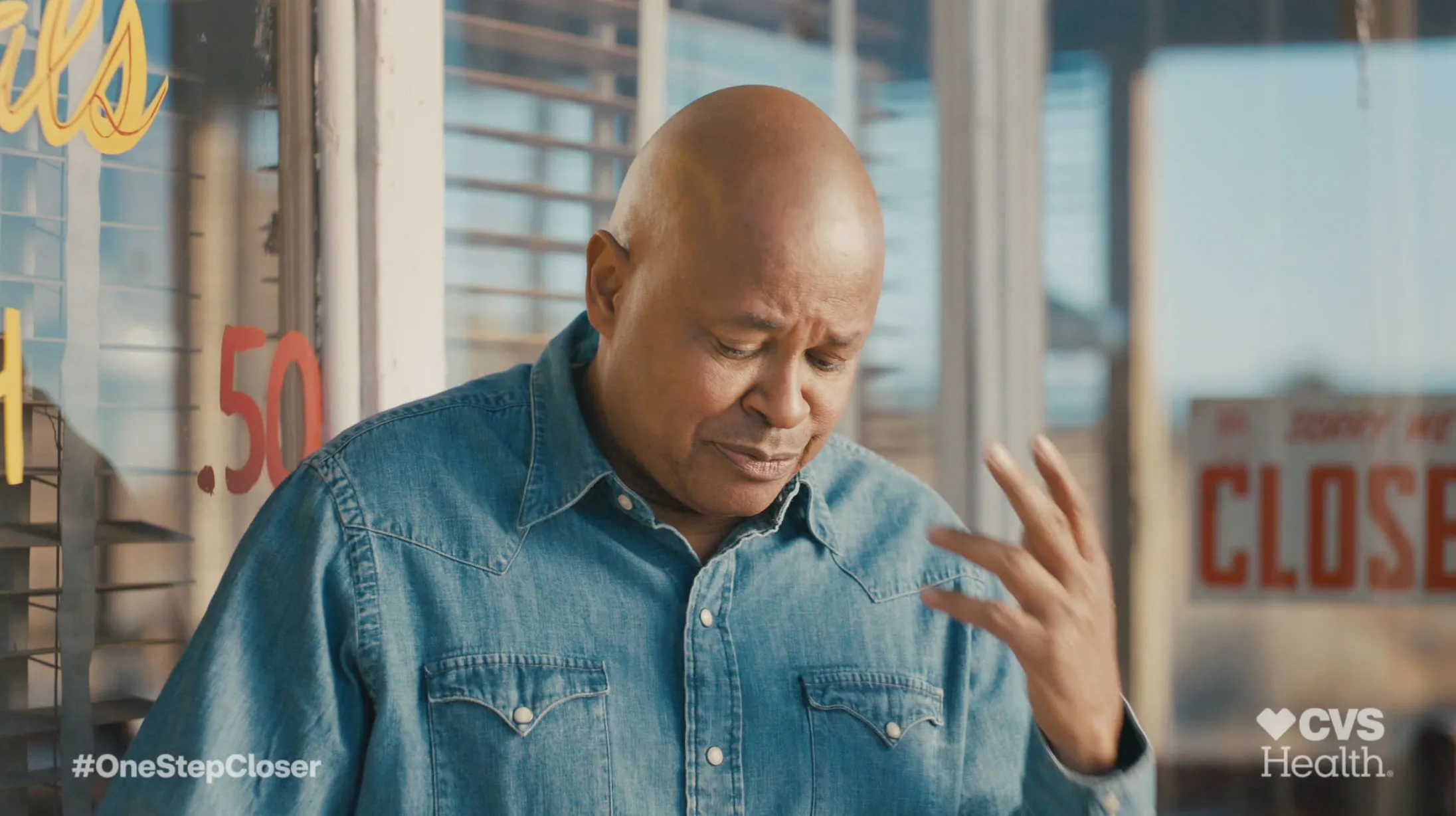
In the #OneStepCloser campaign for CVS Health, the work gave a practical vaccination decision a more human context: a step toward the everyday moments people wanted back. That kind of clarity helps a campaign move across broadcast, digital, in-store and social work without becoming a different story in each place.
That can mean sharpening the brief itself, clarifying the campaign platform, setting the creative direction or helping internal teams and partners decide how an idea should adapt across the customer journey. For a launch, evolving story or complicated brief that needs a clearer center, start a conversation with Chad.
Frequently Asked Questions
Campaign creative brief questions, answered.
What is a creative brief for a campaign?
A campaign creative brief is a focused decision document. It explains the business problem, audience, desired shift, central message, proof and practical boundaries that the work needs to solve. It gives creative teams direction without deciding every execution in advance.
How long should a campaign creative brief be?
It should be as short as the decision allows, often one or two useful pages. The goal is not to capture every background detail. It is to make the priority, audience and decision criteria clear enough that a team can use the brief when choosing what to make.
What is the difference between a creative brief and a marketing plan?
A marketing plan covers the larger program: goals, audience segments, budget, timing, channels and measurement. A creative brief narrows that plan into the specific problem a campaign needs to solve and the idea the audience needs to understand.
Who should approve a campaign creative brief?
The people accountable for the business objective, brand direction and customer experience should agree on the brief before production starts. That does not mean every stakeholder writes it. It means the team shares one clear definition of the decision the work needs to make easier.