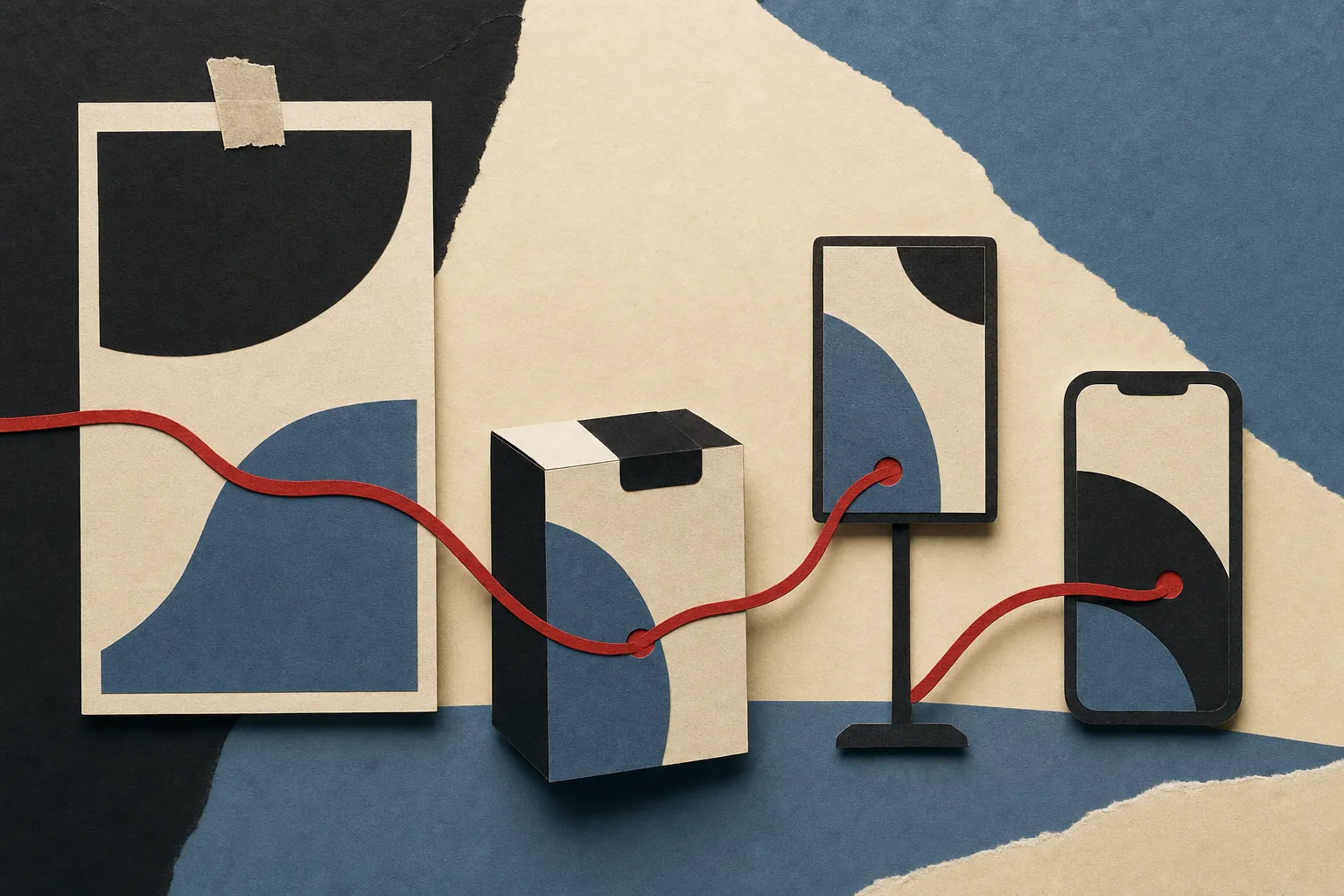
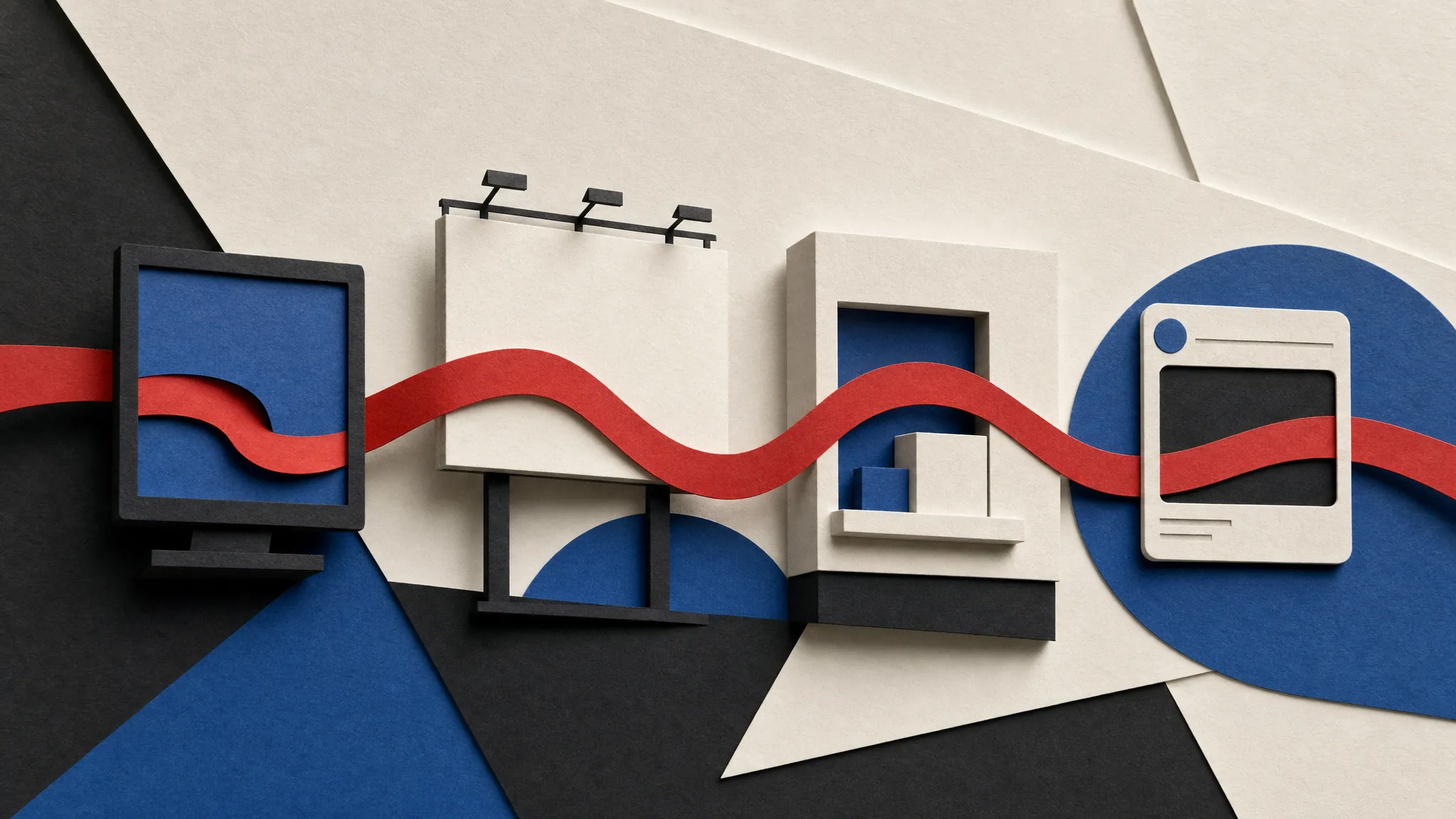
An integrated marketing campaign gives a brand one clear idea, then puts that idea to work in the places people actually encounter it. It is not a channel checklist or one ad copied into every format. It is a coordinated plan that helps each moment do its part: earn attention, build understanding, make the offer tangible or help a person take the next step.
That sounds straightforward, but it is where many campaigns come unstuck. Teams may make a strong film, a thoughtful website, useful social content and a retail display, then discover that none of it feels connected. The cause is usually not a lack of activity. It is the absence of a shared decision about what the campaign needs people to understand, feel or do.
The most useful way to plan is to start with the audience and the business problem, then give the idea room to adapt. The work should feel like one story told well in different settings, not a production schedule trying to pass as strategy.
Integrated marketing campaign example: one idea, different jobs
CVS Health's #OneStepCloser campaign shows what integration looks like when the work starts with a useful human truth. The challenge was not simply to share vaccine information. It was to make a practical health decision feel connected to the ordinary moments people wanted to return to.
The central thought, taking one step closer, gave each customer moment a role. Broadcast and online video made the emotional promise memorable. Digital and social work kept the idea present in everyday decision-making moments. In-store communication made the next action feel immediate. The expressions changed, but every part reinforced the same reason to act.
That is the standard worth aiming for. An integrated campaign does not need every channel a brand owns. It needs a clear enough idea that the channels included can build on one another instead of competing for attention. For a closer look at how to evaluate this kind of work, see the integrated marketing campaign case study guide.
1. Give the campaign one job
Before choosing channels, name the change the campaign needs to create. A brand may need to make an unfamiliar service easier to understand, make an everyday offer feel more relevant, restore confidence, earn consideration before a launch or help people see a category in a new way. "Raise awareness" is only a starting point. Awareness of what, for whom, and in service of what decision?
A clear job creates useful boundaries. It tells the team what belongs in the work and what can wait. It also keeps the campaign from becoming a list of everything the business wants to say at once. The American Marketing Association's guide to branding makes the distinction clear: a brand is the set of perceptions people carry with them, while a campaign is one coordinated effort that can shape those perceptions.
For example, a pharmacy campaign might have a simple job: make vaccination feel like a practical step toward the moments people want back. That gives the team a more useful direction than "talk about vaccines." It can inform the emotional tone, the proof, the calls to action and the way each channel handles the subject.
2. Find the audience tension
Good integration starts with a tension the audience can recognize. It is the friction between where people are now and where the brand wants to help them get. The tension might be uncertainty about a health decision, fatigue with a category that feels overcomplicated, skepticism toward a familiar claim or a gap between what people value and the choices they make in a busy day.
Demographics are useful, but they do not do this work by themselves. "Adults 35 to 54" does not explain what a person needs to hear. The tension does. When a team understands it, the campaign can be both more human and more precise. The message is no longer an internal wish list. It becomes a response to a real obstacle in the customer's path.
This is also where an experienced brand strategy partner can save time. The right audience insight gives creative teams a common starting point before they begin debating headlines, formats or a long asset list.

3. Build an idea that can travel
The central idea is the part of the campaign that should survive every adaptation. It is not simply a tagline, a color palette or a campaign logo. It is the point of view that makes those choices feel related. If a customer saw the campaign in a short video, a store display and a landing page, they should sense the same promise even though the experience in each place is different.
A useful idea has enough tension to create interest and enough clarity to guide decisions. It should be easy for an internal team to explain without a deck, and strong enough to keep working after the launch moment. A quick test: can the idea generate a broad, emotional expression and a small, practical customer moment without becoming vague or generic?
For a closer look at the visual and verbal system that protects that connection, see Campaign Branding: How to Build a System That Holds Together. The system supports the idea. It does not replace it.
4. Assign each channel a role
Integration does not mean every channel carries the full story. That approach usually produces crowded messages and tired audiences. Instead, ask what each moment is best able to do. A film can establish feeling and scale. Paid media can create a sharp first impression. A landing page can explain the promise and offer proof. Social content can introduce specific reasons to care. Retail or sales tools can make the next action feel immediate and simple.
That division of labor is what makes a campaign coherent without making it repetitive. Cision's collection of integrated marketing communication examples is useful for spotting the same pattern: the strongest examples are not one execution placed everywhere, but connected expressions built for different audience moments.
Write the roles down in plain language. If a channel cannot be assigned a specific job, it may not need to be in the first wave. A smaller campaign with clear roles will usually be more effective than a sprawling launch with no logic connecting the pieces.

5. Plan the customer journey, not the internal calendar
Teams often plan campaigns in the order they will produce the work. Customers encounter them in a completely different order. Someone may see a social post first, arrive through a search result, hear about the brand from a friend or walk into a store before seeing any headline campaign asset. Every important entry point has to make sense on its own while still encouraging the next useful move.
Map the few moments that matter: first awareness, active consideration, decision and the experience after someone acts. For each moment, ask what the person knows, what may be getting in the way and what would make the next step easier. Airtable's overview of integrated marketing campaigns also emphasizes coordination across channels, but coordination becomes much more useful when it is organized around the customer's changing needs.
Chad's #OneStepCloser campaign for CVS Health shows how this can work in practice. The central thought made vaccination feel like progress toward everyday life, then carried that human promise across broadcast, digital, in-store and social work. The touchpoints did not need to be identical. They needed to move in the same direction.
6. Turn the idea into a flexible system
Once the idea and channel roles are clear, define what must stay consistent and what can flex. The fixed elements may include the central promise, a few language principles, recognizable visual cues and the emotional tone. The flexible elements may include the story, pacing, proof points, format and call to action. This gives teams room to make work that fits the context without weakening the campaign.
It also makes approval easier. Instead of deciding whether every execution feels good in isolation, leaders can ask whether it is true to the idea and useful for the moment. That creates better creative conversations and gives internal teams, agencies and specialist partners a shared standard for making choices.
The campaign's creative brief should capture these decisions before production starts. A brief cannot predict every execution, but it can protect the few choices that matter most when the work begins to multiply.
7. Measure the change, not just the activity
Measurement should be chosen while the campaign is being planned, not added at the end because someone asks for a report. Start with the business job. If the campaign needs to make an unfamiliar offer easier to understand, look for signs that the message is landing. If it needs to earn qualified demand, look for the traffic, inquiries or actions that show the right people are moving closer. If it needs to change perception, test the associations the brand wants to build.
Reach, impressions and video completions can provide useful context. They show whether people had a chance to encounter the work. They do not prove the campaign created the desired business change by themselves. The American Marketing Association's marketing definitions are a helpful reminder that marketing is about creating value and exchanges, not simply generating visible activity.
Choose a short list of leading signals and a smaller list of outcome measures. Then use what you learn to improve the next expression of the campaign. The goal is not to find one flattering number. It is to make the next decision with more confidence.

How to review the campaign before it launches
A practical review should bring the campaign back to the decisions made at the beginning. Can the team describe the business job in one sentence? Is the audience tension clear enough that someone outside the project can understand why the message matters? Does the central idea give each channel something useful to say without forcing the same execution everywhere?
Then look at the work as a customer would. Start with each touchpoint separately. A first-time viewer should not need the film to understand a social post, and a customer visiting a landing page should not need to have seen the retail display first. Each piece needs enough context to stand on its own. Then look at the sequence. Does the next touchpoint add clarity, confidence or a reason to act, or does it merely repeat the previous one?
Finally, pressure-test the system with the requests that inevitably arrive late in the process. Could the idea become a short paid placement, a product detail, a sales presentation or a service interaction without losing its meaning? If the answer is no, the campaign may be built around a strong execution rather than a durable platform. That is the right time to refine the brief, not after teams have begun producing more material.
Common mistakes to avoid
- Starting with an asset list. A list of videos, posts and emails does not explain why the work should exist or how it will hold together.
- Giving every channel the same message. Consistency comes from a shared idea, not copy-and-paste execution.
- Trying to say everything at once. A campaign needs one dominant thought. Supporting details should arrive when the audience needs them.
- Confusing visual consistency with integration. A coherent look helps, but the campaign also needs a clear promise and a useful role for each touchpoint.
- Measuring only what is easiest to count. Activity metrics are not a substitute for evidence tied to the campaign's original job.
How Chad helps turn a campaign into connected work
Chad works where brand strategy, creative direction and customer experience need to meet. His expertise spans integrated campaigns, healthcare communication, retail experience and creative leadership, with a focus on ideas that can stay clear from the first impression through the practical details that follow.
That can mean defining the campaign platform, building the creative system, clarifying the role of each customer moment or helping internal and specialist teams make decisions without losing the thread. The work is not about adding more material. It is about making the material work together. For a launch or brand story that needs that kind of clarity, start a conversation with Chad.
Frequently Asked Questions
Integrated marketing campaign questions, answered.
What is an integrated marketing campaign?
An integrated marketing campaign is a coordinated effort built around one central idea. Each channel has a job that fits the moment, but the message, promise and recognizable cues work together so the audience experiences one coherent story rather than a collection of unrelated materials.
What channels should an integrated marketing campaign include?
Include the channels that can do useful work for the audience and the business goal. A campaign might connect a film, landing page, paid media, social content, retail moment, sales tool or email. The right answer is rarely every available channel. It is the smallest, most useful group of moments that can move people from awareness to action.
How is integrated marketing different from using the same ad everywhere?
Using the same asset everywhere creates repetition, but not necessarily integration. Integrated work protects the same idea while adapting the expression to the context. A film can create feeling, a web page can explain, and a retail or sales moment can make the next action simple. The audience should recognize the connection without receiving the same message in the same form every time.
How do you measure an integrated marketing campaign?
Start with the change the campaign is meant to create, then choose evidence that can show progress toward it. That may include attention, message understanding, qualified traffic, consideration, inquiries, conversion or repeat behavior. Channel reach can be useful context, but the strongest measurement connects back to the business decision the campaign was designed to influence.