
An advertising brief is the decision document that turns “we need a campaign” into a clear assignment an agency or creative team can actually solve. It does not need to predict the final ad. It needs to explain the business change the work must create, the people it needs to matter to and the one idea the audience should take away.
That distinction saves time and protects the work. A request for a video, social posts or a new launch page may describe the output, but it does not yet explain the job. An advertising brief gives those deliverables a purpose. It gives everyone, from the business lead to the production partner, a shared way to judge whether a decision is helping or merely adding activity.
What is an advertising brief?
An advertising brief is a concise document from a client or marketing team to the people developing advertising. It frames the business problem, the audience situation, the desired response, the message, proof, practical constraints and the way decisions will be made. It is the starting point for a campaign, not a report on everything the company knows.
The American Marketing Association’s creative brief guidance makes the same practical case: teams need a shared picture of the strategic context, audience, messaging and production detail before work begins. The useful advertising brief does that in plain language, then lets specialists bring their own judgment to the creative response.
Think of it as the contract for the decision, not a contract for a particular execution. “Make people aware of our new service” is still too vague. “Help time-pressed caregivers understand that they can get connected care in one familiar place” gives the work a real audience, problem and outcome. The first line creates a meeting. The second gives a team something to make.
Advertising brief vs. campaign brief vs. creative brief
These labels are often used interchangeably, which is fine until the assignment gets complex. The important thing is to keep the levels of decision distinct.
An advertising brief usually comes from the business or marketing side. It explains why advertising is needed, what it needs to change and the boundaries around the job. A campaign brief takes a wider view when a launch needs to connect advertising with a landing page, store, sales conversation, customer experience or service moment. It establishes the common direction across the journey. A creative brief is the focused prompt for the people who will turn that direction into a campaign idea, writing, design, film or other expression.
On a small assignment, one short document can carry all three roles. On a larger launch, separating them prevents false choices. The business team can agree on the change it needs. The campaign team can decide how that promise travels. The creative team can solve for attention, feeling and memorability without having to re-litigate the business problem in every review.
Start with the problem, not the deliverable
A brief loses its usefulness when it begins with a shopping list. “We need a 30-second film, six social assets and an email” is a production scope. It does not tell anyone why those things matter or whether they are the best response.
Start instead with the problem behind the request. Perhaps customers know the company for one useful service but do not understand a newer offer. Perhaps a change in the market has made familiar benefits feel interchangeable. Perhaps the organization has a strong product story but no consistent way to express it across customer moments. The problem should be specific enough that a team can recognize a good answer when it sees one.
This is where a brief benefits from an honest conversation before the kickoff. The 4A’s guidance on client briefs describes the brief as a focused account of the problem or opportunity creative work needs to solve. That focus is more valuable than a long company history. Include background only when it changes the decision the team needs to make.
The eight decisions an advertising brief should make clear
There is no magic template, but a strong brief answers the questions that otherwise come back as late feedback. Use these eight decisions as a working structure.
1. The business situation
Describe what has changed or what needs to change. Be concrete about the offer, the market moment and the role advertising can reasonably play. Advertising can create attention, shift understanding and make a promise easier to remember. It cannot repair an unclear offer or a difficult customer experience on its own.
2. The objective
Name one primary outcome. It might be getting a new audience to understand an unfamiliar service, making a benefit more distinctive, encouraging a qualified next step or rebuilding confidence after a change. A campaign plan can hold the broader measures and owners, but the brief needs one dominant job so the creative response has a center.
3. The audience situation
Describe the person’s context, not just an age range or title. What are they trying to do? What makes this category confusing, stressful, dull or easy to ignore? What would need to feel true before they give the message their attention? A demographic can guide media. A human situation gives the work something to solve.
4. The desired response
Write the thought, feeling or action the work should earn. For example: “I did not realize this service could make care easier for my family,” or “This is the brand that understands the practical pressure I am under.” A clear desired response keeps the work from trying to make people feel everything at once.
5. The single message
State the one thing the audience should remember. It is not a list of product features or every approved talking point. It is the central promise that makes the details meaningful. If the message needs a paragraph to explain, it is usually still a collection of messages. The campaign messaging framework can help separate the central promise from the proof and channel-specific language that support it.
6. Reasons to believe
Give the team the evidence that makes the message credible: a distinctive capability, an experience customers can see, a product truth, a demonstrated result or a useful point of difference. Proof should make the promise more believable, not bury it. When the evidence is weak, the brief should say so. Overclaiming is not a creative challenge. It is a trust problem.

7. The places and moments that matter
Note where people will encounter the work and what each moment needs to do. A first exposure may need to create relevance. A landing page may need to answer practical questions. A retail setting may need to make the promise visible. This does not mean every channel gets the same message pasted into a different format. It means each expression has a role in the same story.
8. Constraints, owners and timing
Finish with the conditions that genuinely shape the work: required facts, legal or category boundaries, budget range, timing, available assets, decision makers and the next approval point. This is not the place to prescribe the idea. It is the place to prevent avoidable surprises after an agency or team has already invested in one.
Write the brief so a team can use it
The best briefs are specific without becoming controlling. They explain the destination, then leave room for the people doing the work to find the most interesting route there. A long brief can still be vague if it has not made the hard choices. A short brief can be powerful when every line answers a real decision.
Use plain statements rather than internal language. Replace “increase brand affinity among priority consumers” with what that would look like in a customer’s mind. Replace “deliver a disruptive 360 campaign” with the actual problem the campaign needs to solve. If a new colleague cannot explain the brief back in their own words, it is not ready yet.
It also helps to separate facts from preferences. A required offer detail, regulated claim or fixed launch date belongs in the brief. A stakeholder’s preferred color, favorite headline or preferred channel may not. The AMA’s advice on creative briefs is useful here: a brief should invite intelligent thinking rather than turn into a rigid script.
A short advertising brief example
Imagine a familiar neighborhood retailer introducing a new care service. The weak brief says, “Create advertising to promote our new service.” The team now has to guess whether the challenge is awareness, trust, comprehension or store visits.
A useful version could say: “Help busy caregivers understand that they can get more connected everyday care in the local place they already trust. The message is that more of the care they need is available in one familiar place. Show the care team, pharmacy expertise and practical support as proof. The first work should make the service easy to picture, while the service page and in-store experience should make the next step easy to take.”
That is not a finished campaign idea. It is better. It gives the creative team a human tension to make memorable, gives channel teams a clear role and gives decision makers a standard for review. The worked campaign brief example shows how that kind of direction can become a fuller launch plan.
Use the brief through the work, not only at kickoff
A brief becomes valuable when the work gets harder. Use it to frame the kickoff, then bring it back at the first concept review, production decisions and launch check. The questions are simple: Does this idea make the audience situation feel understood? Does it make the message clearer? Is the proof visible? Does the next customer moment live up to the promise?
This is especially important in an integrated marketing campaign. A strong idea may begin in a film or ad, but customers judge it against the website, retail experience, service interaction and follow-up. The brief helps each team decide what must remain consistent and what should adapt to the context. That is how a campaign feels coherent without feeling repetitive.

Before launch, turn the brief into a final conversation rather than a forgotten attachment. The marketing campaign checklist is useful for confirming that the message, proof, customer journey, owners and early learning plan are ready. If the campaign cannot meet the promise at a key moment, the problem is better found before the work is in market.
How Chad helps turn a business need into work that holds together
Chad helps teams make the decisions that need to exist before the asset list gets long. His work across brand strategy, integrated campaigns, retail experience and creative direction brings the business problem, audience context and customer journey into the same conversation, then carries the resulting idea through the places people actually encounter it.
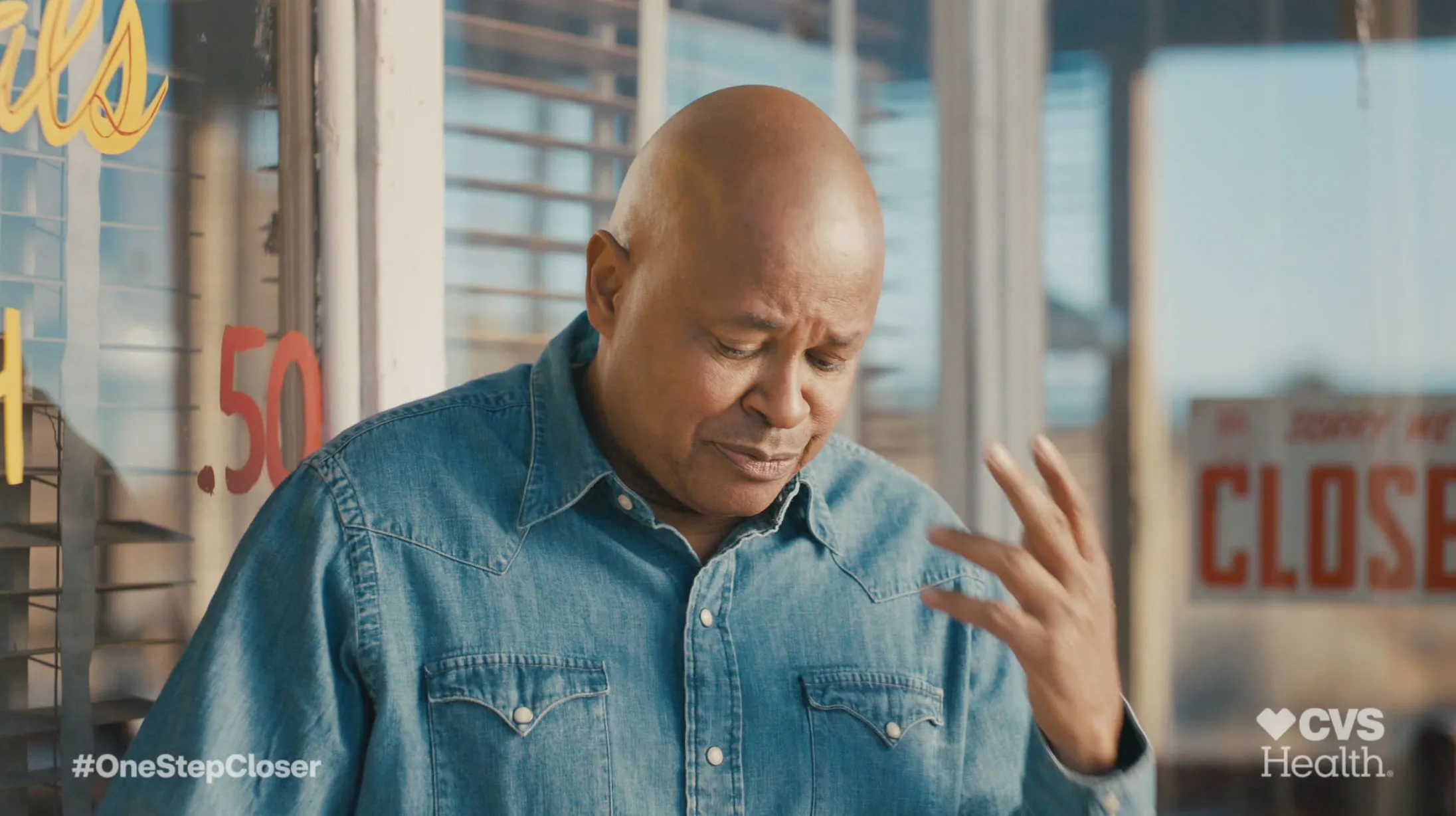
That might mean clarifying the real assignment, shaping the campaign platform, identifying credible proof or guiding the creative system from concept through launch. The #OneStepCloser campaign for CVS Health is one example of how a clear human idea can move across broadcast, digital, in-store and social moments without losing its point. For a launch, changing offer or campaign that needs a stronger center, start a conversation with Chad.
Frequently Asked Questions
Advertising brief questions, answered.
What is the difference between an advertising brief and a creative brief?
An advertising brief is the client-facing direction for the overall assignment. It explains the business need, audience, message, practical constraints and the role advertising should play. A creative brief is the distilled working document a creative team uses to develop the idea and executions. On a smaller project, one document can do both jobs, as long as it gives people enough context and one clear decision to solve.
How long should an advertising brief be?
The essential brief is often one or two pages, with research, product detail and brand guidance available as supporting material. The goal is not to make the document short at any cost. It is to make the important choices easy to find and hard to misunderstand.
Who should write an advertising brief?
The person closest to the business objective usually owns the first draft, but the final brief should be agreed by the people responsible for the offer, customer understanding, brand and approval. A brief works best when the people who can change the work later have resolved the central choices before production starts.
What makes an advertising brief useful to an agency?
A useful brief gives an agency a real problem to solve, a well-defined audience situation, a single message to make memorable, credible proof and clear boundaries. It leaves room for expert creative thinking while removing the ambiguity that creates rounds of rework.