
To create an advertising campaign, make the hard decisions before making the assets. A campaign is not a media plan with a headline attached. It is a coordinated answer to a business problem, designed to give a particular group of people a clearer reason to notice, believe or act.
The sequence matters because every later choice becomes easier when the assignment has a clear center.
That sounds obvious until a team is under pressure to launch. Then the request often becomes, “We need ads,” followed by a list of formats. The problem is that formats cannot resolve a fuzzy objective, an undefined audience or a promise with no proof. Better work begins by putting the decisions in order. These eight decisions create a practical path from a business need to a campaign a team can actually use.
1. Name the business problem, not the deliverables
Start with what needs to change in the real world. A new service may be misunderstood. A useful offer may be easy to overlook. A familiar brand may need to become relevant in a new customer moment. Those are campaign problems. “Make a video,” “run social ads” and “refresh the homepage” are possible responses, not the reason to start.
Write the problem in one sentence that includes the audience and the change you need. For example: help busy families understand that a nearby pharmacy can make routine care more convenient. This gives the team a human situation to solve. It also gives stakeholders a useful test: if an idea does not make that situation clearer, it is not doing the job.
Keep the sentence honest about the limits of advertising. A campaign can make a valuable offer easier to notice and understand. It cannot make a poor experience dependable, create product-market fit, or replace a decision about price, availability or service. Naming the boundary early prevents the campaign from being asked to carry work that belongs elsewhere in the business.
The campaign plan template can help turn that sentence into a working decision before the asset list gets long.
2. Define a real audience situation
An audience is not just an age range or a media segment. It is a person in a situation, carrying a need, a pressure, a belief or a hesitation. “Small-business owners” is broad. “Owners who know their customer experience is inconsistent but do not know where to start” gives a campaign a useful tension.
Look for evidence before choosing the tension: customer interviews, service calls, search behavior, sales conversations, reviews, observations or existing research. The Nielsen Norman Group’s customer-journey guidance is useful here because it treats the experience as a sequence of interactions, not one isolated click. Your campaign needs to make sense in the moments that lead up to a decision, not merely in the ad slot.
Do not confuse a targetable audience with an insight. Media tools may be able to find parents, professionals or current customers, but a useful campaign needs to know what is getting in the way for them. The better the team understands that pressure, the less it has to rely on generic promises such as quality, innovation or convenience. Those words only become meaningful when tied to a real situation.
3. Set one outcome the campaign can influence
Campaigns can support sales, awareness, consideration, trial, retention or a shift in understanding. They rarely do all of those equally well at once. Choose the main outcome, then identify the leading signals that tell you whether the work is moving in the right direction.
A brand introducing an unfamiliar service might need people to understand the offer before it can expect a purchase. A retailer promoting a timely reason to visit might need store traffic or offer activation. The American Marketing Association’s strategy resources reinforce the point that objectives must be specific enough to guide decisions. A vague ambition such as “get more awareness” makes it impossible to decide what message, proof or channel deserves priority.
Write down the tradeoff as well. A fast response campaign may use a narrow, action-led message and a clear destination. A longer-term brand campaign may need more patience, consistency and a message that can stay useful through several expressions. Neither is automatically better. They solve different jobs, and pretending they are the same is how one campaign ends up with too many competing measures.

4. Choose a message people can carry with them
A campaign message is not a list of every benefit. It is the central thought you want people to take away, expressed in language they can understand and remember. The strongest messages connect a customer tension to a credible reason the brand matters.
Try writing the message as a complete thought from the customer’s point of view. “This makes the next step easier.” “This understands what I am dealing with.” “I can get the value without the usual hassle.” Then ask what would make that thought believable. If the proof does not exist, the problem is not the wording. It is the offer, experience or evidence behind it.
Pressure-test the message with the people closest to the customer. Can a sales lead, service representative or store colleague explain it in their own words? Does the product team recognize the proof behind it? Would a skeptical customer see the connection between the claim and the experience? A message that survives those questions has a better chance of remaining clear after it passes through media, creative and operational teams.
For a deeper way to organize the idea, use the campaign messaging framework to separate the central promise from the supporting proof.
5. Decide where each customer moment helps
Do not treat every channel as a place to repeat the same asset. Give each one a role. A broad-reach placement may introduce the tension and create recognition. Search, a landing page or a sales conversation may explain the offer. Retail, product experience or follow-up communications may deliver the proof. The campaign becomes more coherent when those moments work together instead of competing for the same job.
This is why channel selection should follow the audience and message, not precede them. The people you need to reach, the context in which they make decisions and the amount of explanation the offer needs will affect the mix. The IPA’s guide to briefing an agency makes a related point: a useful brief explains the context and the problem, rather than prescribing a finished answer before the work begins.
Map the handoffs as carefully as the media. If a video sends people to a landing page, the page should continue the same thought and make the next action obvious. If a retail display creates interest, the in-store experience needs to make the offer easy to find. If a sales team receives leads, it needs a practical way to carry the message forward. The joins between moments are often where promising campaigns lose their force.

6. Build a creative system, not a pile of executions
Once the message is clear, develop the core creative idea and the rules that keep it recognizable. That includes the verbal thought, visual cues, tone, proof points and the parts that must remain constant as the work changes format. It should be recognizable without becoming rigid.
Give the system enough specificity to be useful. Define the few things a partner should protect, the elements that can flex, and the situations that need a different expression. This saves time later because teams do not have to reopen the central decision whenever a new channel, audience segment or customer question appears. The system becomes a way to make good adaptations rather than a style guide that sits unused.
A useful creative system gives people room to adapt. A short video can create feeling. A social post can highlight one proof point. A display, email or landing page can answer the practical question that follows. They do not need identical copy or layouts. They need to feel like they came from the same point of view. Chad’s campaign branding guide explains how that structure helps a campaign remain coherent across real customer moments.
7. Prepare the launch as a learning period
Before launch, make sure the promised experience can support the work. Check the destinations, offer details, customer-facing teams, approvals, measurement and contingency plan. A campaign can create attention quickly. It cannot repair an unclear service page, an unavailable offer or a handoff that leaves customers waiting for an answer.
Run a realistic customer journey before the campaign is public. Follow the link, try to find the offer, read the confirmation, ask the question a customer is likely to ask and see what happens next. This simple rehearsal catches the gaps that dashboards miss: mismatched language, missing details, a call to action without a clear destination or an experience that asks too much before it provides value.
Launch with a short learning agenda: what do we need to know in the first week, what signal would change the plan, and who can make that call? This prevents a team from mistaking activity for learning. It also makes adjustment less political. You are not changing direction because someone has a preference. You are responding to evidence about the audience, message or experience.

8. Review the campaign against the original decision
After the first flight, return to the problem statement and the outcome you chose. Did the work reach the people it needed to reach? Did they understand the intended message? Did the offer or experience support the promise? What became more useful, and what created friction?
Some answers will come from numbers. Others will come from customer questions, sales feedback, service observations and the quality of the response. Use both. A campaign that produces attention but confusion needs a different fix from one that is clear but not reaching enough of the right people. This review is how a team preserves what is working while changing what is not.
Make the review a decision, not a presentation. Choose whether to keep, refine, expand or stop the work, and write down why. That record makes the next campaign easier to plan because it turns one launch into usable institutional knowledge. It also protects the team from repeating the same debate months later without the evidence that settled it the first time.
How Chad helps turn a business need into a campaign
Chad helps organizations make the decisions that give creative work a clear center: the business problem, customer context, message, proof and experience around the campaign. His work across brand strategy, integrated campaigns and customer experience is built to connect a strong idea with the places people actually encounter it.
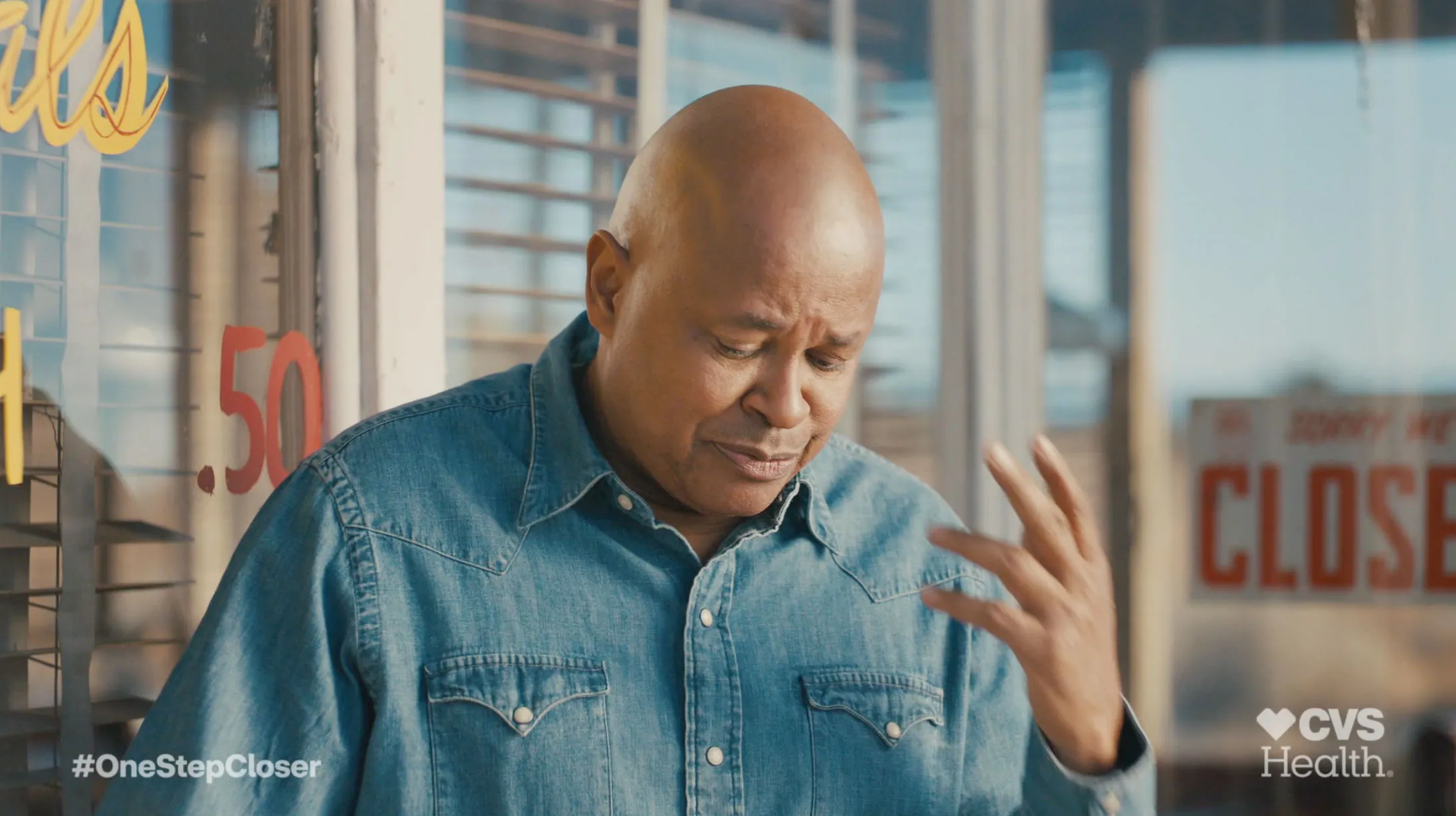
The #OneStepCloser work for CVS Health shows how a human campaign idea can move through broadcast, digital, retail and social moments while staying recognizable. If a launch, offer or customer experience needs a stronger through-line, start a conversation with Chad.
Frequently Asked Questions
Advertising campaign questions, answered.
What are the first steps in creating an advertising campaign?
Start by defining the business problem, the audience whose behavior or perception needs to change, and the outcome that would make the investment worthwhile. Those decisions should come before choosing channels, formats or slogans, because they determine what the campaign is actually for.
What should an advertising campaign brief include?
A useful brief explains the problem, audience, desired response, central message, proof, customer moments, practical constraints, owners and measures. It gives a creative team enough direction to solve the assignment without pre-deciding every execution.
How do you choose channels for an advertising campaign?
Choose channels based on the job each customer moment needs to do. A channel can create awareness, make an unfamiliar offer understandable, provide proof, prompt action or help an existing customer follow through. Do not select channels simply because they are popular or because every competitor uses them.
How do you know if an advertising campaign worked?
Judge the campaign against the change it was designed to create. That might be awareness, consideration, qualified inquiries, store visits, sales, repeat use or a clearer understanding of an offer. Pair that outcome with early evidence about reach, response and customer feedback so the team can learn while the work is live.