Communication strategy
Clarify the role a message needs to play before it expands into a campaign, service launch or customer journey.

Healthcare Communications
For healthcare teams that need a complex message to become clear, credible and useful in the moments people make decisions.
Start a conversation
Make the message matter
Healthcare teams often begin with something that matters deeply: a new care service, an important prevention step, a changing benefit or a message that people need to understand before they can act. The challenge is that the truth of the offer can arrive wrapped in detail. Clinical language, business requirements, review needs and competing stakeholder priorities all deserve attention. The person receiving the message still needs to know what this means for them.
Chad helps teams find the communication idea that gives the details a clear job. It may be the human reason to pay attention, the story that makes a new service feel relevant or the message structure that helps people move from an initial question to a confident next step. The goal is not to remove the substance. It is to make the substance easier to recognize, believe and use.
That work is especially valuable when the message must carry more than one burden. It may need to be warm without becoming vague, precise without feeling cold, and consistent across a campaign, digital journey, retail environment and real conversation. A strong communications direction gives every one of those moments a common center.
For the team, that means less time trying to reconcile competing versions of the same story. For the people they need to reach, it means a clearer experience of what is being offered and why it deserves their attention.
Clarify the role a message needs to play before it expands into a campaign, service launch or customer journey.
Turn complicated health information into a story that respects what people are deciding and what they need to know next.
Give the central promise, supporting proof and essential details a useful order across channels and moments.
Help internal teams and specialist partners make decisions from one clear customer-facing idea.
Begin with the decision
Good health communication starts before the headline. It starts with the practical and emotional situation the audience is already carrying. Are they deciding whether to take a prevention step? Trying to understand a service that feels unfamiliar? Looking for confidence that a brand can help? Or sorting through information that is important but not yet meaningful?
Chad works with teams to get specific about that moment. What needs to become easier to understand? What hesitation or competing message is getting in the way? What does the audience need to believe before a useful action feels possible? Those questions make it easier to choose what deserves emphasis, what belongs in supporting detail and what can wait until the person is ready for it.
From there, the work becomes a usable communication system. The central idea creates relevance. The message hierarchy keeps the promise, proof and practical information in the right relationship. The creative principles help every expression feel connected without making every channel look or sound identical. Each touchpoint can do the part it is best suited to do, whether it is earning attention, answering a question, building trust or helping someone take the next step.
This is not communication as a finishing layer. It is a way to make the wider effort more coherent from the start. When the direction is clear, internal teams can make stronger choices, specialist partners can add their expertise without pulling the story apart and the people receiving the work are less likely to feel they are being asked to solve the organization’s complexity for themselves.
Built for scrutiny and humanity
Healthcare communication is often made by many capable people, each responsible for an essential piece. Marketing, brand, medical, legal, regulatory, agency and customer-experience teams may all need the work to hold up for different reasons. Without a shared center, the message can become technically complete but difficult for a person to feel or follow.
Chad brings strategic thinking and creative direction together around the audience’s experience. His role is to create a clear, human idea that can stay useful as the work moves through review, channel development and the everyday environments where people encounter it. That makes conversations more productive because the team can judge choices against a real customer outcome, not simply a collection of preferences.
The result is communication that can carry the necessary detail without letting the detail take over. It gives a serious subject the care it deserves, while helping a customer or patient see the relevance before the moment has passed.
Explore healthcare marketing consulting →Explore pharmaceutical marketing consulting →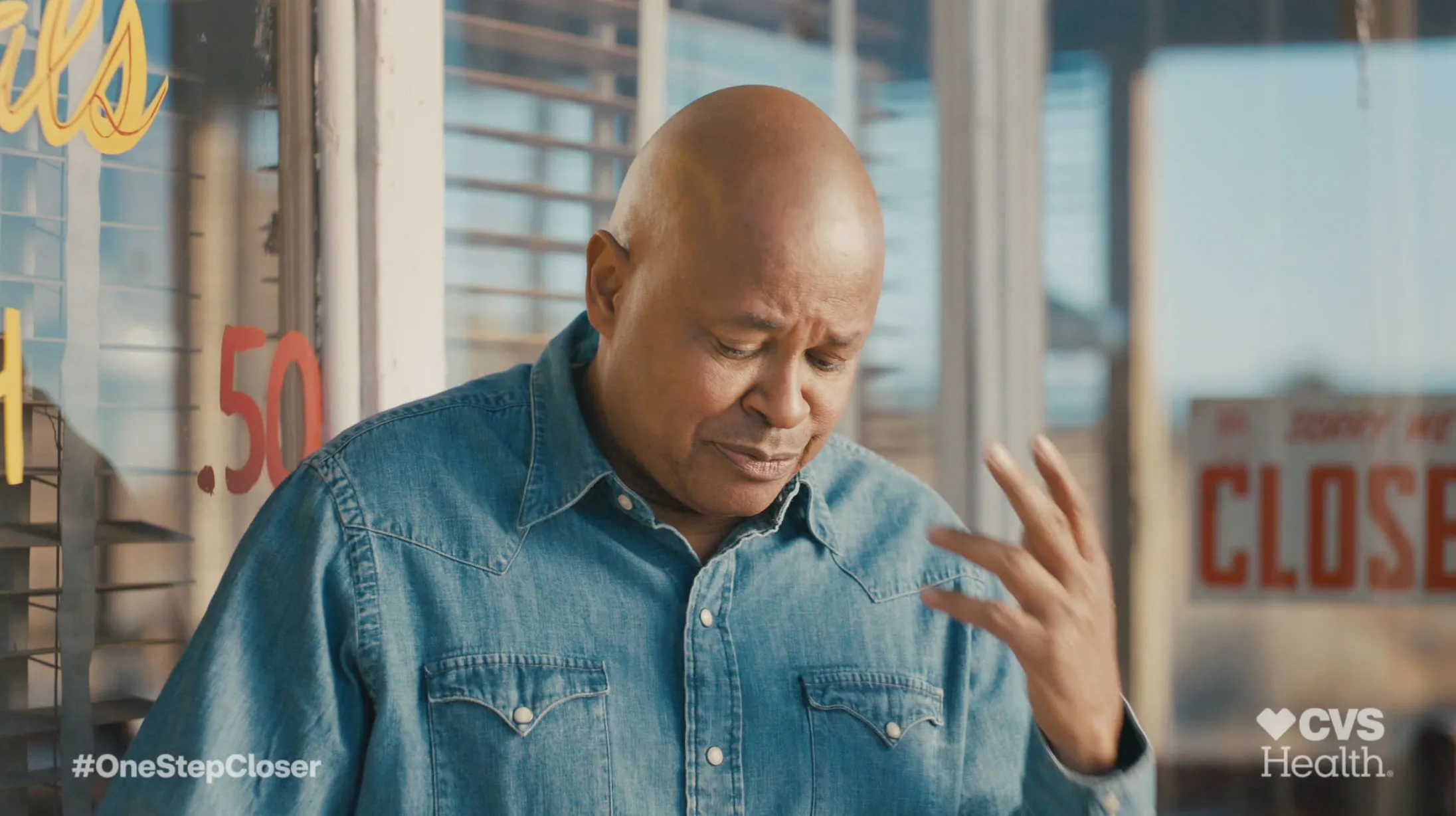
Selected work
For CVS Health’s #OneStepCloser, the task was larger than explaining vaccination. The campaign connected a practical health decision to the everyday people and moments customers were ready to return to. Chad led the end-to-end creative development across broadcast, digital, in-store and social work.
The work shows what a clear communications idea can do in a high-stakes moment. It gave people a human reason to care, while providing a flexible direction that could stay recognizable across the places the decision was encountered.
View the case study →How Chad works
Some engagements begin when the organization knows it has something important to say but has not yet found the clearest way to say it. Others begin when the work is already in motion: there are capable partners, valid requirements and a growing set of messages, but the experience does not yet add up to one confident story.
Chad can help frame the communication challenge, identify the customer-facing decision, shape a platform or message architecture and guide the creative work as it becomes real. He can work alongside an internal team at a pivotal planning point, bring an experienced outside view to a campaign or help agency and specialist partners align around the same human outcome.
The level of involvement follows the challenge, but the focus stays practical. A direction is only useful if it helps the people responsible for the work make better choices after the first meeting. It needs to clarify the promise, protect the most important idea and leave enough room for expert detail to do its job at the right moment.
That is what makes the final communication feel considered rather than assembled. The audience encounters a story that respects their attention. The team has a standard they can use. And an important health conversation has a stronger chance of being understood for the right reasons.
Frequently asked questions
Chad helps healthcare teams turn an important but complicated message into communication people can understand and use. The work can include the strategic direction, campaign story, message hierarchy, patient-facing communication and creative leadership needed to keep the experience connected.
Healthcare marketing can cover the full effort to bring a service, brand or campaign to market. Healthcare communications focuses on the customer-facing meaning of that effort: what people need to understand, how the message earns trust and how it stays clear as it moves through channels, teams and practical moments.
Yes. Chad has experience in direct-to-consumer pharmaceutical advertising and regulated healthcare branding. He helps teams create a human, usable direction while respecting the careful collaboration that high-scrutiny communication requires.
An outside perspective is especially useful when a new service, health initiative or campaign has many stakeholders and important information, but the customer-facing story is still not clear enough. Chad can help frame the central decision and give the wider team a direction they can act on.